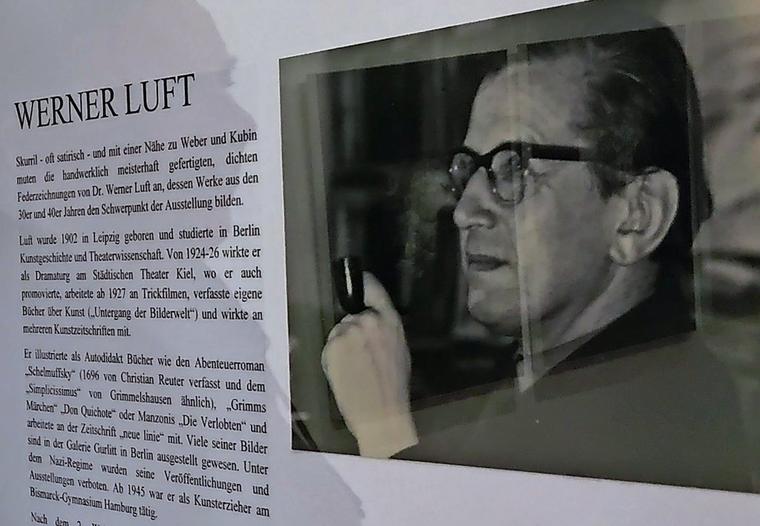
Werner Luft was born 1902 in the city of Leipzig, and grew up in Plauen, a small town in south-east Germany.
At the beginning of the 1920s, he studied science of art and theatre studies at the (Universität der Künste Berlin, damals Kunstschule zu Berlin /School of Art Berlin). After that, he operated from 1924-1926 on the Städtischen Theater Kiel (Urban Theatre of the northern German town Kiel) as a dramaturg. In this town he did his doctorate on theatre studies too.
After his studies, he was actively involved in various fields of art as autodidact; after 1927 he worked as author, illustrator, and also on animated cartoons. He authored and published books and took part in various art magazines.
Until he got debarred from working by the Nazis, he also contributed to the magazin „die neue linie“, which was published between 1929 und 1943. This journal was created in Berlin by Bauhaus artists, and beside everyday topics it thematised trends of technique and architecture, especially from the perspective of Bauhaus – at the time a radical new concept.
Apart from his own writings, he also illustrated other books with much devotion and talent, including books like „Grimms Märchen“, „Don Quichote“, the adventure novel „Schelmuffsky“ or Manzonis „Die Verlobten“.
Various of his illustrations have been exibited in the “Galerie Gurlitt” (Gurlitt Gallery) in Berlin. The mutual passion for art developed an amicable relationship with Wolfgang Gurlitt. The Nazis defamed him as a ‘degenerate artist’, and banned Werner Luft’s paintings and exhibitions. From 1945 he worked as an art teacher on the Bismarck-Gymnasium Hamburg (Bismarck High School of Hamburg).
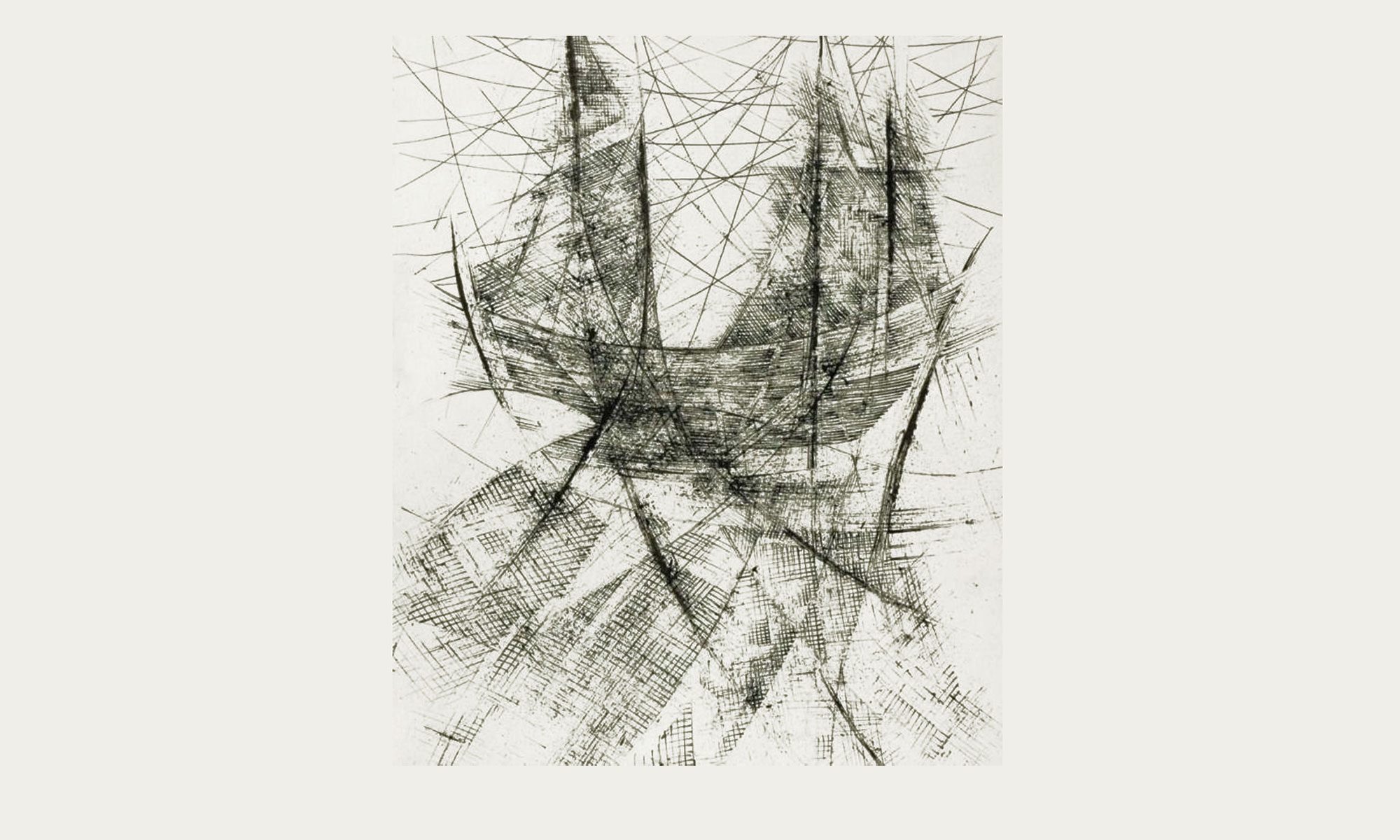
After many objectivistic illustrations – often caricatural – his work changed through the thirties and forties of the 20th century to a more abstract style, which had a decisive influence on his work after 1945.
Werner Luft died in 1978 in the city of Hamburg.